
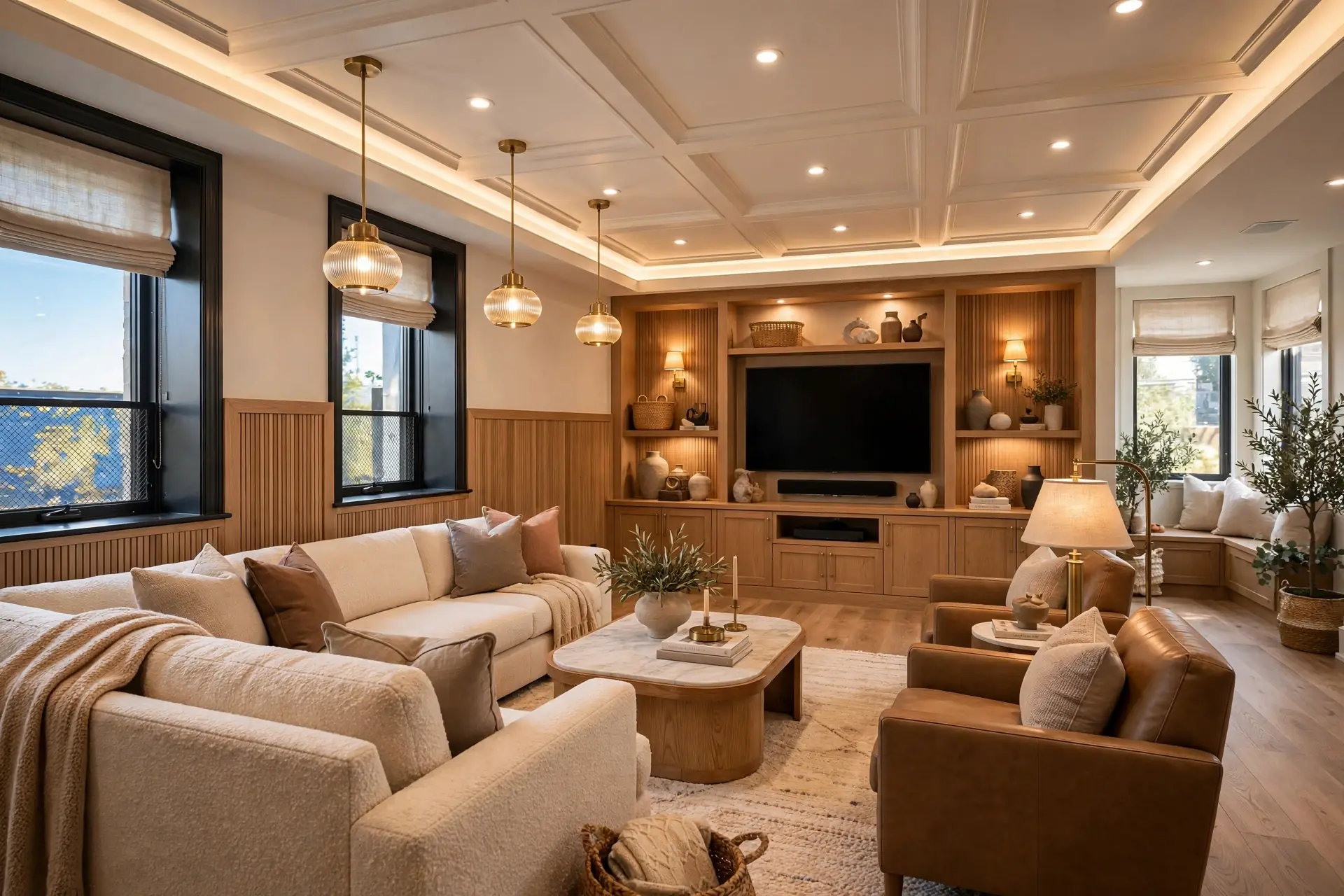
Renovation
A calm home renovation checklist
A calm home renovation checklist: survey first, freeze scope, hold a budget buffer, sequence the trades, and plan for living through it.
Survey first
Every renovation starts with a proper survey. Structure, plumbing, electrical load and damp are checked before the design is drawn.
Surprises found on paper cost a conversation. Surprises found mid-build cost money and weeks.
Freeze scope, hold a buffer
Decide the full scope and freeze it before work begins. Changes mid-build are the main reason renovations overrun.
Hold a buffer of 10 to 15 percent of the budget for what the walls reveal. If you do not spend it, it is yours.

Sequence the trades
Renovations run in a fixed order: demolition and civil work, plumbing and electrical, then joinery, paint and finishing. Each trade needs the one before it finished.
Rushing the sequence creates rework. A realistic programme agreed upfront keeps everyone honest.
Living through it
Decide early whether you stay or move out. Living through a renovation saves rent but slows work and tests patience.
If you stay, agree on dust control, working hours and which rooms stay usable. Put it in writing. See our residential renovation service for how we manage occupied homes.
The renovation checklist
| Phase | Key checks | Who decides |
|---|---|---|
| Survey | Damp, wiring, plumbing, structure | Engineer and studio |
| Scope | Rooms, finishes, what stays | Owner with designer |
| Strip out | Protection, disposal, hidden issues | Site team |
| Services | Electrical, plumbing, HVAC first fix | MEP team |
| Finishes | Plaster, flooring, joinery, paint | Site team with designer |
| Handover | Snag list, testing, cleaning | Owner and studio |
Do these in order
- Survey the house before choosing a single finish.
- Write the scope room by room and freeze it.
- Keep a contingency for what opens up behind walls.
- Sequence the trades so nothing finished gets broken.
- Walk the snag list together before the final payment.
Common mistakes to avoid
- Choosing tiles before checking the plumbing behind them.
- Living in rooms that are mid-renovation without protection.
- Paying in full before the snag list is closed.
- Running several contractors with no single point of contact.
Documents to keep
- The agreed scope, drawings and itemised quote.
- Written records of every change and its cost.
- Receipts and manuals for fittings and appliances.
- Photos of hidden services before walls are closed.
- Paint codes, tile names and batch numbers.
Photos of pipes and cables before plastering are especially valuable. They show exactly where it is safe to drill later.
Snagging before final payment
Before the last payment, walk through every room with a written list. Check finishes in daylight, test every switch and tap, open every door and drawer, and look for leaks under sinks.
Agree a date for the snags to be fixed and check them again. A calm, thorough handover is the best way to finish a renovation well.
Next steps
If you are planning a home renovation, write down what must change, what must stay and the date you need the space ready. Take photos of the space today and collect a few images you like.
List the problems you live with today, such as damp, poor storage or dark rooms, in order of priority.
When you are ready, see our house renovation page or book a site visit or studio meeting. A designer can review your space and prepare a written, itemised quote.
The short version.
- Survey before design: Know the bones of the house before drawing anything.
- Freeze and buffer: Locked scope plus a 10 to 15 percent buffer keeps budgets calm.
- Respect the sequence: Civil, services, joinery, finishes. In that order.
Questions
Asked often, answered plainly.
10 to 15 percent of the build cost. Older homes and buildings with unknown services sit at the higher end.
A single floor refresh can take 6 to 10 weeks. A full house renovation usually runs 3 to 5 months depending on scope.
Often yes, if the work is phased room by room with agreed dust control and hours. Full structural or services work is easier with the house empty.
Structure, roof and damp, then plumbing and electrical capacity. Finishes come last in the survey, not first.
Surprises found on paper cost a conversation. Surprises found mid-build cost money and weeks.
Keep looking
Related reading.

What interior design costs in Pakistan
Design fees per sq ft, room budgets and build ranges in Pakistan.
Read the article
Small rooms that live large
Storage walls, sightlines, light and multipurpose zones for compact homes.
Read the article
How a Woodex project runs
From first call to handover: brief, survey, concept, 3D, quantities, build.
Read the article